(859) 559-2244
(502) 938-7663
(513) 500-6632
(606) 222-0669
Something is leaking inside your building. The ceiling tile is stained. You call it a “minor issue” and push it to next month’s work order. In commercial buildings — especially those with flat or low-slope roofs — what starts as a small commercial roof repair opportunity almost always becomes a full replacement project if you ignore it long enough.
That’s the difference between a $1,500 patch and a $75,000 re-roof. And that gap widens fast.
This article tackles commercial roof repair from the angle most building owners overlook: not as a routine checkup, but as an urgent, reactive decision you have to make when something is already wrong — and make correctly.
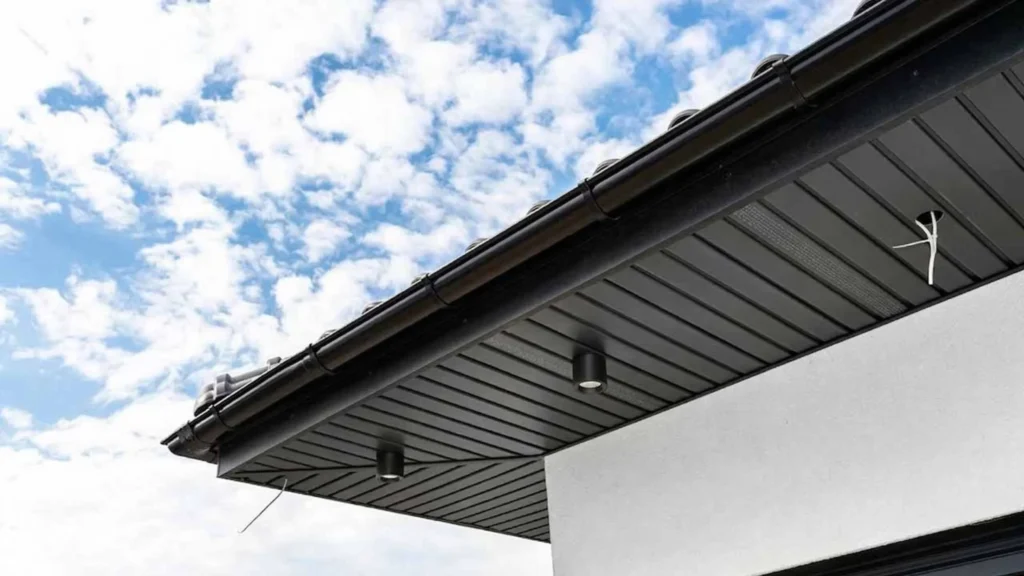
Commercial roof repair is the targeted correction of existing damage or failure in a roofing system — membrane punctures, seam separations, failed flashings, ponding water zones, or cracked caulking around HVAC penetrations.
Preventive maintenance is proactive. It is scheduled. It buys time before problems appear. Repair is reactive. It responds to damage that is already there.
That distinction matters more than most people realize.
With maintenance, you have time to plan and budget. With repair, you are already behind. Every hour that water has access to your building’s insulation layer, deck, or interior compounds the damage. Mold can begin forming in wet insulation within 24 to 48 hours. Structural decking can start to deteriorate within weeks of sustained moisture exposure.
So when we talk about commercial roof repair, we are talking about speed, accuracy, and choosing the right commercial roofing contractor before the problem multiplies into something far more expensive.
Here is a number worth knowing: roughly 80% of commercial buildings in the United States use flat or low-slope roofing systems. In Kentucky — from Louisville to Lexington to the Northern Kentucky corridor — that number holds true across retail centers, warehouses, office parks, schools, and multi-family complexes.
Flat roofs make sense for commercial construction. They are cost-effective to build. They accommodate HVAC systems, exhaust units, and utility infrastructure more easily than pitched roofs. And they provide usable rooftop space when designed correctly.
But they carry a vulnerability that steep roofs do not. Water does not drain naturally. It pools. It sits. And when a membrane has even a pinhole of compromise, standing water turns a small problem into a structural crisis within weeks.
Kentucky’s climate accelerates this. The state sees significant rainfall year-round, combined with freeze-thaw cycles in winter that expand existing cracks and work against aging membranes. TPO, EPDM, and PVC systems — the three most common flat roofing membranes — can last 20 to 30 years with proper care. Without it, you may hit 12.
This is exactly why quality roofing in this region means more than using good materials. It means understanding what Kentucky weather does to a commercial roofing system over time — and responding before that damage becomes irreversible.
You may be making this mistake: waiting for an active leak before taking action. By the time water is dripping through your ceiling, the damage has already spread far beyond the entry point. Water travels. It moves horizontally through insulation, follows structural channels, and surfaces in places that have nothing to do with where it actually came in.
Have you ever walked your building’s roof and known what you were actually looking at? Most facility managers do not have the training to assess a commercial roofing system the way a professional can. That is not a criticism — it is reality. An experienced commercial roofing contractor identifies problems you cannot see: subsurface moisture infiltration, delamination, early membrane fatigue. All invisible from inside the building. All clearly apparent to a trained eye during a proper inspection.
The repair process matters just as much as the decision to repair. A patch applied without identifying the true source of infiltration is not a repair. It is a delay.
Here is how quality commercial roof repair actually works when done right.
A qualified contractor does not just find the leak and cover it. They walk the entire roof. They check seams, flashings, penetrations, and drains. In more thorough assessments, they use infrared thermography — a technique that identifies wet insulation beneath a dry surface by detecting temperature differentials. Wet areas retain heat differently than dry ones, making them visible on a thermal scan even when the membrane above looks perfectly intact.
We have seen it firsthand: a building where a contractor repaired an obvious puncture on the north side, only for the owner to call back two months later with the same complaint — because an undetected seam failure on the east side was never addressed. The visible problem was fixed. The real problem was not.
Not all flat roofs are the same, and not all repairs work the same way.
A contractor committed to quality roofing matches the repair method to the material, the age of the system, and the severity of the damage. One-size-fits-all repair work is not repair work at all.
Flashings fail because of improper installation or thermal movement. Drains clog and create ponding. HVAC equipment gets repositioned and the surrounding curb flashing is never properly resecured. If a repair does not address why the failure happened, the same failure will happen again — usually faster the second time, because the system is already compromised and the weak point has been identified.
The phrase gets used constantly, but quality roofing means something specific in a commercial context.
It means materials certified by the manufacturer for the specific application. Installation performed by technicians trained and certified on those specific products. Documented warranties — both manufacturer product warranties and contractor workmanship warranties. And a contractor who knows local climate conditions, local building codes, and the particular challenges of maintaining commercial roofing systems in Kentucky.
Manufacturer certifications are a concrete signal. Very few contractors in Kentucky hold both the Owens Corning Preferred Contractor designation and GAF MasterElite status simultaneously. These are not marketing badges — they require ongoing training, performance documentation, and a proven track record of quality installation. When a contractor holds both, it says something meaningful about the work you can expect.
Here is where building owners often go wrong: they price-shop commercial roof repair the same way they would shop a residential job. Lowest bid wins.
That approach will cost you more money, not less.
A poorly executed repair does not just fail — it fails in ways that accelerate damage to the surrounding system. Improper heat-welding on a TPO seam creates a stress point that propagates outward. A flashing repair using the wrong adhesive cures brittle in cold weather and opens up the following winter. Quality commercial roofing work saves money over a three-to-five-year horizon, even when the upfront price is higher.
When evaluating a commercial roofing contractor, work through this checklist:
One contractor worth evaluating in the Central and Northern Kentucky market is United Contracting KY. They carry both Owens Corning Preferred Contractor and GAF MasterElite certifications — one of very few contractors in the state to hold both — and they serve the Louisville and Lexington markets with documented commercial experience.
For commercial roof repair projects where warranty-backed installation matters, that dual-certification status is not common. It is worth paying attention to.
This is one of the most common questions building owners face, and it deserves a direct answer.
If your roofing system is less than 15 years old and the damage is isolated — a failed seam, compromised flashing, a localized puncture — commercial roof repair is almost always the right call. A well-executed repair on a structurally sound system can extend its useful life by five to ten years.
If the system is approaching end-of-life, or if infrared scanning reveals widespread subsurface moisture across 25% or more of the roof area, the economics shift. Patching a saturated roof is like putting a bandage on a structural problem. The insulation is already compromised. The deck may be showing early deterioration. At that point, a full replacement is not just recommended — it is the responsible decision.
A reputable commercial roofing contractor gives you an honest assessment either way. Be cautious of contractors who default to full replacement without data to support the recommendation. Be equally cautious of those who promise a repair will “buy you a few more years” without examining what is happening below the surface.
Most localized repairs — flashing replacement, seam re-welding, small puncture patches — can be completed in a single day. Larger-scale repairs involving multiple zones may require two to three days depending on weather and the complexity of the system.
It depends on the system. TPO repairs using heat-welding can generally be performed in cold conditions with proper equipment. Adhesive-based EPDM repairs become more challenging below 40°F because cure times extend significantly. A qualified commercial roofing contractor will adjust their methods to suit the conditions.
Minor flashing or seam repairs may run $500 to $2,500. More significant membrane repairs across larger areas can range from $5,000 to $20,000 or more. The most important cost factor: catching damage early. The longer it goes unaddressed, the higher the number climbs — and the more likely a repair becomes a replacement.
The industry standard is a minimum of twice per year — spring and fall — plus a follow-up after any significant weather event such as a hailstorm, high-wind event, or ice accumulation. Twice-yearly inspections keep repair costs manageable by catching problems while they are still small.
A quality repair on a system that still has structural integrity remaining can extend the roof’s useful life by five to ten years. The operative phrase is “structural integrity remaining.” If the deck or insulation is already compromised, even a perfect repair will underperform. Proper assessment before repair begins is not optional — it determines whether a repair is a viable long-term solution or a short-term delay.
The most expensive commercial roof repair is the one you delayed.
Water does not announce itself. It works quietly — moving through insulation, undermining decking, establishing conditions for mold before you ever notice a stain on the ceiling. By the time the damage is visible from the inside, you are already dealing with a problem that is two or three times more expensive than it would have been twelve months earlier.
Commercial roof repair done correctly — by a qualified commercial roofing contractor using the right methods for your specific system — is one of the highest-return decisions a building owner can make. Quality roofing is not just about new installations. It is about protecting what you have already built, on a timeline that makes financial sense.
If your roof has not been professionally assessed in the last 12 months, that is your next step. Not next quarter. Now.