(859) 559-2244
(502) 938-7663
(513) 500-6632
(606) 222-0669
If you’re searching for vinyl siding installers near me in Kentucky, you’re already asking the right question, because who installs your siding matters just as much as what they install.
Here’s a question worth sitting with: when was the last time you really looked at the outside of your home? Not a glance from the driveway.
Actually, look. Because for a lot of Kentucky homeowners and property managers, the answer is “not recently enough”; and by the time siding damage becomes obvious from the street, it’s already been doing quiet, expensive work behind the scenes.
Vinyl siding is one of the most searched exterior materials in the country, and for good reason. It’s durable, cost-effective, and low-maintenance in a way that actually holds up in the real world. But choosing the right material is only half the equation. The siding contractors you hire make or break the outcome.
This guide walks you through everything: what vinyl siding is, why it performs so well in Kentucky’s climate, how to find and vet reliable installers, and what separates the best siding contractors from the ones you’ll regret hiring.
Vinyl siding is an exterior wall cladding made from PVC (polyvinyl chloride), engineered to protect your home from moisture, wind, and temperature extremes while requiring minimal upkeep. It installs over your home’s existing sheathing in overlapping horizontal or vertical panels, creating a sealed barrier that keeps the elements out and helps regulate indoor temperature. Available in dozens of colors, textures, and profiles, it’s one of the most versatile exterior options on the market.
Think of it as your home’s armor. And like any armor, it needs to fit well and be installed correctly to actually do the job.
Here’s the surprising part: vinyl siding can last up to 60 years when properly installed and maintained. That’s longer than most roofing systems and far longer than wood siding that requires repainting every 5 to 7 years. For property owners managing multiple buildings (or homeowners who want to protect their investment without constant upkeep) that lifespan is a serious advantage.
Vinyl siding can last up to 60 years. That’s not a marketing claim, it’s backed by the International Association of Certified Home Inspectors.
Kentucky is not gentle on exterior surfaces. Summers bring humidity and UV exposure that fade and warp wood. Winters cycle through freezes and thaws that crack paint and push moisture into gaps. Spring storms show up without warning and leave real damage behind.
So why does vinyl siding consistently come out on top in this market? Because it was built for exactly this kind of punishment.
Modern vinyl formulations expand and contract with temperature fluctuations, a critical feature in a state where temperatures can swing 40 degrees in a single day. Unlike wood, which absorbs moisture and eventually rots, vinyl sheds water by design.
We’ve seen it firsthand on job sites across Louisville, Lexington, and smaller Kentucky communities: homes that replaced deteriorating wood siding with quality vinyl 10 or 15 years ago still look sharp today. No peeling. No warping. No rot around the window trim. That’s not luck, that’s the right material installed by skilled siding contractors.
Not all siding materials make the same sense for Kentucky’s climate and budget. Here’s a direct comparison:
| Siding Type | Avg. Cost / sq ft | Lifespan | Maintenance | Best For |
|---|---|---|---|---|
| Vinyl | $2 – $6 | Up to 60 years | Very Low | Budget-conscious residential & commercial |
| James Hardie / Fiber Cement | $6 – $12 | 30 – 50 years | Low | Premium durability; fire & pest resistance |
| Composite / Engineered Wood | $5 – $10 | 25 – 40 years | Low | Wood aesthetics without wood maintenance |
| Wood (Traditional) | $7 – $14 | 20 – 30 years | High | Historic homes; custom aesthetics |
| Metal | $4 – $8 | 40 – 70 years | Low | Commercial and industrial properties |
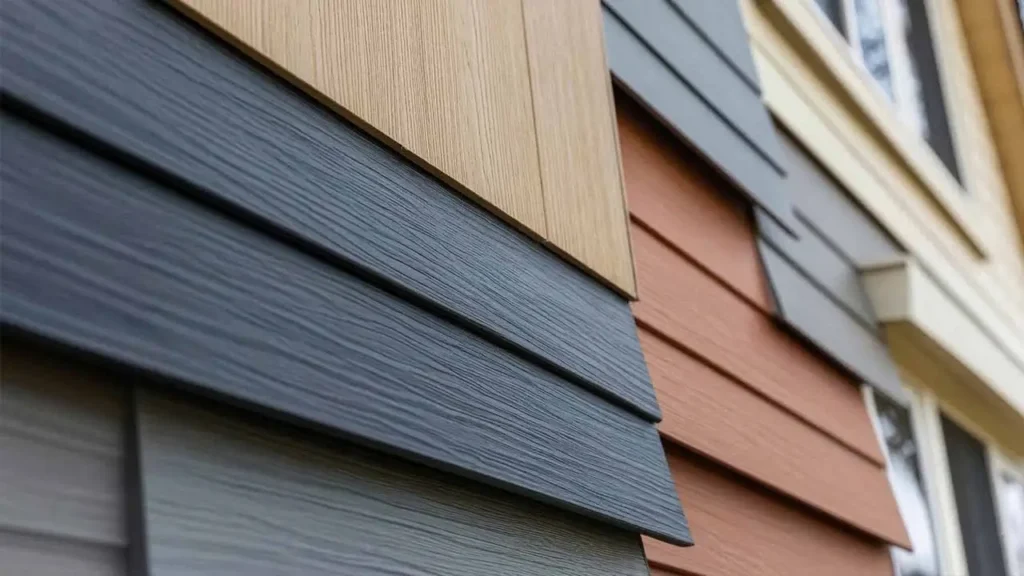
For most residential and light commercial applications in Kentucky, vinyl delivers the best return per dollar. If fire resistance and premium curb appeal are priorities, fiber cement (specifically James Hardie siding) is worth the extra investment. A reputable siding contractor will walk you through both options honestly, without pushing the higher-ticket item just to pad the invoice.
The number most websites bury: vinyl siding installation typically runs between $2 and $6 per square foot. For a standard one-story home, that’s roughly $3,000 to $20,000 depending on home size, installation complexity, and material grade.
What drives the range? These real factors:
Pro tip: get at least three quotes from licensed siding contractors before committing. Not to race to the lowest price, but to identify outliers and understand what you’re actually being charged for. A detailed, itemized quote is a basic professionalism standard. If a contractor won’t provide one, that’s your answer.
Searching vinyl siding installers near me is a great starting point, but the real work happens after you have a list of names. Not every company that shows up in local results is equally qualified.
One example of a contractor worth looking into: United Contracting (often searched as United Siding by Kentucky homeowners) a Kentucky-based exterior contractor that covers siding, roofing, and related services across the state.
Companies like these (licensed, insured, and established in the local market) are the baseline you should be comparing everyone else against.
The most important certification in this industry is VSI (Vinyl Siding Institute) certification, now operated under PEPA (Polymeric Exterior Products Association). VSI-certified installers have completed formal training in installation technique, moisture management, and quality standards.
Beyond VSI certification, look for:
A contractor who can confirm all of the above isn’t automatically perfect. But one who can’t confirm any of it? Walk away.
Before you commit to any siding contractor, ask these questions, and expect clear, direct answers:
That last question matters more than most people realize. Some contractors win the bid and then subcontract to whoever is cheapest that week. You deserve to know who is showing up at your home.
You wouldn’t hire a surgeon without checking credentials. Hiring a siding contractor should involve at least the same due diligence.
One of the biggest advantages of working with established siding contractors (rather than big-box store installers) is access to a wider range of styles, profiles, and textures. Here’s what’s available:
A note on color: modern vinyl uses through-body pigmentation, meaning the color runs through the material rather than sitting on the surface. This is why high-quality vinyl resists fading so well. Brands like ProVia, Crane, and CertainTeed offer dozens of fade-resistant options with strong manufacturer warranties.
This is where quality siding contractors earn their money. The material might be identical from one job to the next. The installation technique is where the difference shows, not just on day one, but 10 and 20 years down the road.
Here’s what a proper installation sequence looks like:
The honest answer: not much. That’s the whole point.
Vinyl siding is often called maintenance-free, and while nothing is truly maintenance-free, it comes close. Here’s what reasonable upkeep actually looks like:
Quality vinyl siding, properly installed by certified siding contractors, can last 40 to 60 years in Kentucky. The key variables are material grade, installation quality, and basic annual maintenance. Economy-grade products installed by uncertified crews consistently underperform on all three fronts.
Yes, especially with insulated vinyl siding. The foam backing adds meaningful R-value to your exterior walls, reducing heat transfer in both summer and winter. In Kentucky’s climate, where both heating and cooling costs run high, this produces noticeable savings on monthly energy bills.
If damage is limited to a few panels, repair is usually the right call. But widespread cracking, fading, warping, mold growth behind panels, or unexplained increases in energy bills typically mean full replacement makes more financial sense than patching. A qualified siding contractor can assess this honestly, get a second opinion if the first quote feels off.
VSI (Vinyl Siding Institute) certification (now administered by PEPA) is the industry’s primary training and quality standard for vinyl siding installers. Certified installers have completed formal coursework on installation technique, moisture management, and product-specific best practices. It’s the clearest indicator that the person installing your siding knows what they’re doing.
Technically yes, but it’s not advisable for most homeowners. Common DIY errors (nails driven too tight, improper overlap, inadequate moisture barrier) void manufacturer warranties and lead to moisture infiltration over time. The labor savings rarely offset the risk. For a full installation or replacement, hire certified siding contractors.
Start with a search for vinyl siding installers near me and filter for VSI-certified or manufacturer-certified contractors. Check BBB ratings and Google reviews. Get three itemized quotes, verify licensing and insurance independently, and ask specifically who will perform the installation.
Contractors like United Contracting, whose siding work is frequently referenced online as United Siding, with a clear local presence and documented credentials, are the kind of benchmark you’re looking for when shortlisting candidates.
Vinyl siding is one of the highest-return exterior investments you can make on a Kentucky property. It protects. It performs. And with the right installer, it does both for decades.
But ‘the right installer’ does a lot of work in that sentence. The Kentucky market has excellent siding contractors: VSI-certified, licensed, insured, and backed by real customer reviews. It also has contractors who give a great pitch and disappear when problems surface two years later.
You now know the difference. You know what to look for, what to ask, and what a legitimate installation actually involves.
The next step is simple: request free estimates from at least three siding contractors and compare them: not just on price, but on scope, credentials, warranty, and the people behind the company.
If you’re in Kentucky and want a starting point, United Contracting is worth including in that shortlist. They cover siding and exterior work across the state, and their site makes it easy to request a quote directly.
Your home’s exterior is its first line of defense and its first impression. It deserves both.