(859) 559-2244
(502) 938-7663
(513) 500-6632
(606) 222-0669
With the arrival of cold temperatures in Kentucky, homeowners must deal with a weather phenomenon that, although silent, can seriously compromise the integrity of their home: ice dams.
Understanding how these ice deposits form and the risk they pose to your roofing system is essential to avoiding costly repairs.
Below, we will explain how to protect your roof and prevent damage caused by ice dams in your home to ensure that your home remains dry and protected this winter.
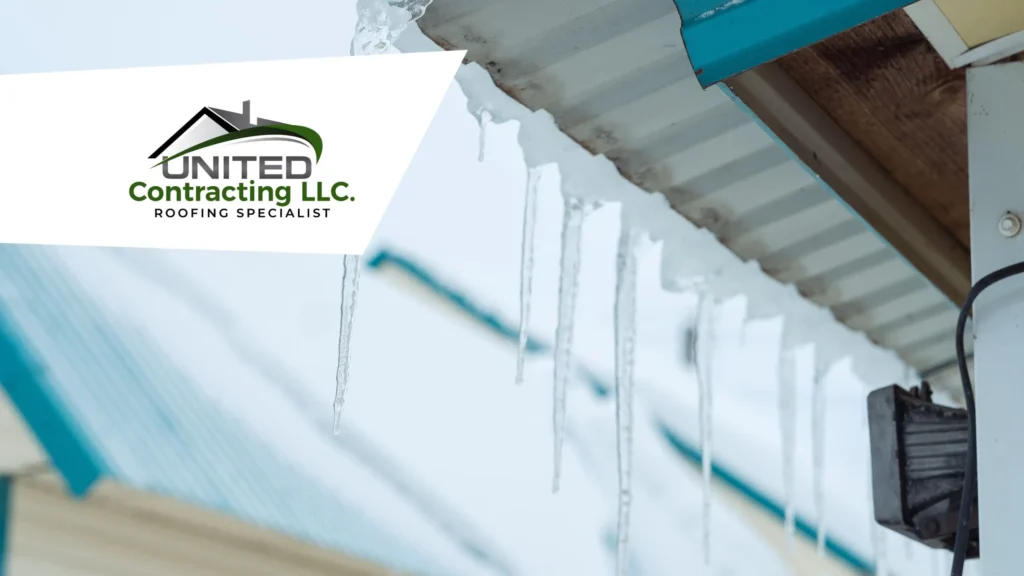
An ice dam is an accumulation of ice that forms at the edge of a roof, specifically on the eaves or gutters. Its appearance is not random nor does it depend solely on the outside weather; it is the result of a thermal imbalance between the different sections of your roofing system.
The formation of this phenomenon follows a specific physical sequence that every homeowner should be aware of:
The presence of ice dams in a home is not just an external drainage problem; it poses a direct threat to the structural components and health of the home’s inhabitants.
When water manages to overcome the barrier of the shingles, the effects are often progressive and costly:
The key to preventing ice dams is not to remove the ice manually, which can be dangerous for the homeowner and damaging to the shingles, but to properly manage ventilation and insulation.
A professionally optimized roofing system must meet three fundamental requirements before the first snowfall:
A preventive assessment of ice dams by professionals allows for the identification of vulnerabilities that are not visible to the naked eye, such as obstructions in ventilation ducts or deficiencies in the sealing of roof penetrations. Our technical team evaluates each component to ensure that your roofing system functions as a cohesive unit against the elements.
If you want to ensure that your home has the protection it needs to withstand the demands of Kentucky’s winter weather, contact us today. Our experts will perform a specialized technical inspection to guarantee your peace of mind and the longevity of your investment.