
(859) 559-2244
(502) 938-7663
(513) 500-6632
(606) 222-0669
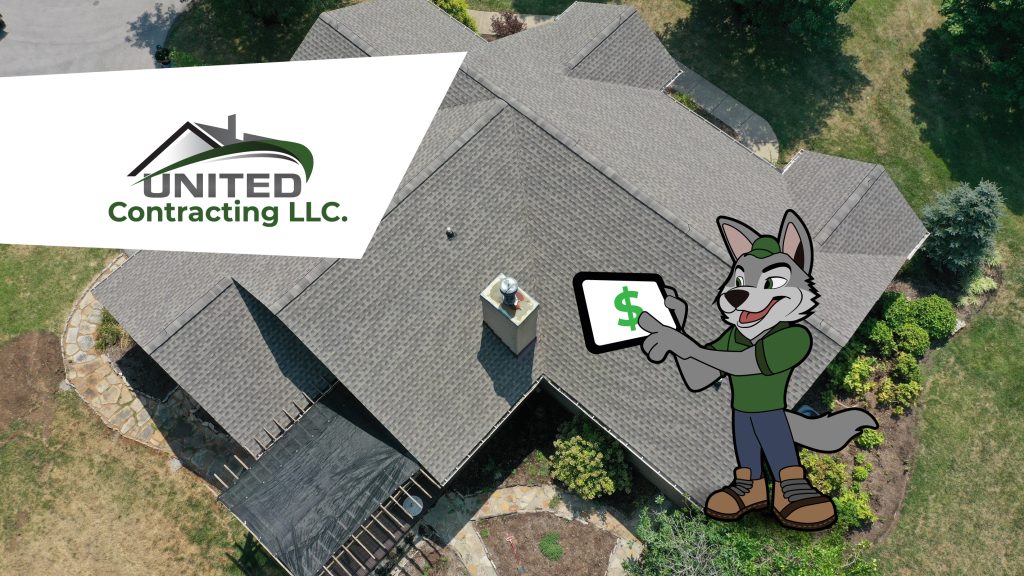
A new roof in Kentucky averages $8,000 to $24,000, with most projects between $8,000 and $24,000. See 2026 costs by material, roof size, financing and insurance.
If you’re considering replacing your roof in Kentucky, it’s important to understand the new roof cost in Kentucky and what factors are involved. The price of a new roof can vary significantly based on the material, roof size, and regional labor rates. For homeowners in Louisville, Lexington, and surrounding areas, knowing the estimated new roof cost in Kentucky upfront can help you budget effectively and choose the best option for your property. In this guide, we’ll cover everything you need to know about roof replacement costs in Kentucky and provide you with helpful insights for your next roofing project.
Most Kentucky homeowners spend $8,000 to $24,000 on a full roof replacement, with typical projects landing between $8,000 and $24,000.
A modest single-story home with a simple roofline and standard architectural shingles sits near the bottom of that range. A larger two-story home with a steep pitch, multiple valleys, and an upgraded material sits near the top.
Two houses on the same street in Lexington can be quoted thousands of dollars apart, and both quotes can be fair.
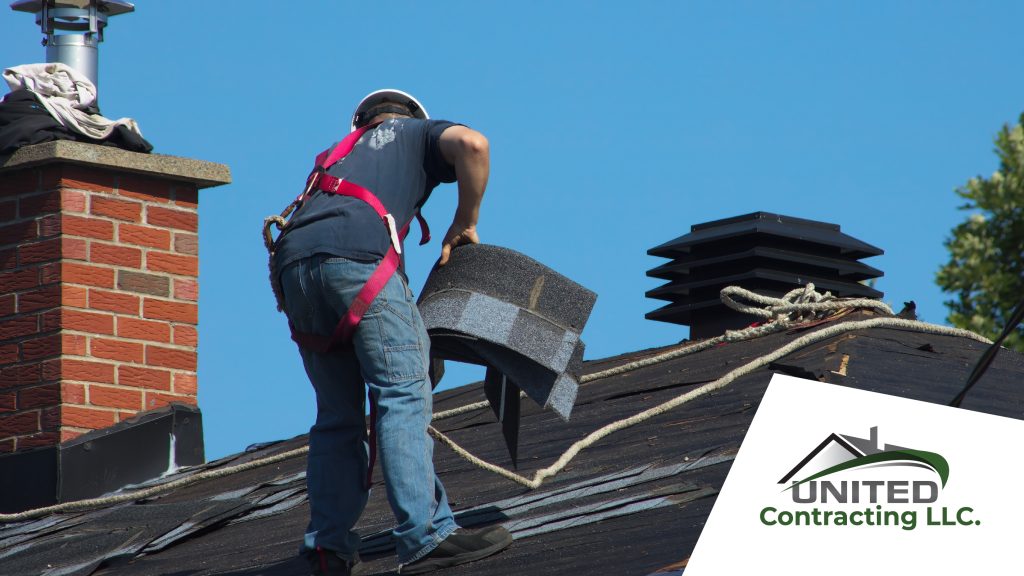
If you want a real number for your specific roof, United Contracting provides a free on-site inspection with a detailed estimate and photo report across Lexington, Louisville, Burlington, and Somerset.
Material choice drives more of your final price than any other decision you will make. Here is how the options common on Kentucky homes compare in 2026.
Asphalt remains the most installed residential roofing material in Kentucky, and for good reason. It performs well against the state’s humid summers and freeze-thaw winters, it is widely stocked by regional suppliers, and it carries the lowest upfront cost of any full roof system.
Material tier also determines what manufacturer warranty you qualify for.
$4.50 to $8.00 per square foot installed | $9,000 to $20,000 typical project total.
Metal has gained real ground in Kentucky over the past several years. It sheds snow and ice, resists wind uplift, reflects summer heat, and routinely outlasts asphalt by decades. The tradeoff is a higher number on day one.
Screws are driven through the face of the panel, faster to install and more affordable, which makes this the common pick for outbuildings, workshops, barns, and some ranch-style homes.
Panels lock together with concealed fasteners, producing a continuous watertight plane and a cleaner architectural look, it costs more and takes longer to install, and it is the stronger long-term system.
Metal typically costs more upfront than architectural shingles but can last two to three times as long, which is why the comparison is better made on cost per year of service life than on the bottom line of the estimate.
$6.00 to $16.00 per square foot installed | $14,000 to $34,000 typical project total
Tile and natural slate are premium systems chosen for appearance and longevity, most often on historic properties and custom homes.
Slate in particular can outlive the people who install it.
Both are heavy, and many homes need structural reinforcement before they can carry the load, which is a cost most homeowners do not anticipate. Synthetic and composite alternatives replicate the look at a lower weight and a lower installed price.
$12.00 to $28.00 per square foot installed | $25,000+ typical project total.
Not every Kentucky roof is pitched. Flat and low-slope sections show up on additions, porches, and most commercial buildings, and they use membrane systems instead of shingles.
Pricing works differently here because the material is sold and installed by the roll rather than by the bundle.
$6.00 to $14.00 per square foot installed.
Home Size | Approx. Roofing Squares | Typical Architectural Shingle Cost |
1,000–1,200 sq ft | 11–15 squares | $8,500–$11,500 |
1,200–1,500 sq ft | 14–18 squares | $9,500–$13,500 |
1,500–2,000 sq ft | 17–24 squares | $11,000–$17,000 |
2,000–2,500 sq ft | 23–30 squares | $13,500–$22,000 |
2,500–3,000+ sq ft | 28–38 squares | $16,000–$26,000+ |
The figures assume a common roofing project, a single existing layer to tear off, and decking in sound condition. Change any one of those assumptions and the total moves. The only way to get an accurate cost number is to have the roof measured and inspected by United Contracting.
Homeowners often ask why one contractor came in at one number and another came in thousands higher for what looks like the same job.
More roof means more material, more labor hours, more underlayment, more fasteners, and more disposal weight.
Size is the foundation of the estimate.
Very small roofs often carry a higher cost per square because setup, mobilization, dumpster delivery, and permitting are close to fixed regardless of how small the job is.
Moving from architectural shingles to standing seam metal can change the total dramatically on an identical roof structure, with no change in labor complexity at all.
Labor commonly accounts for a large share of a residential roof replacement in Kentucky. Rates vary with local market demand, crew availability, and how much of the job is skilled detail work rather than open-field shingle installation.
Metro markets like Louisville and Lexington generally carry different labor economics than smaller communities such as Somerset, though material costs stay fairly consistent statewide.
A steep roof requires fall protection, staging, and slower production. Crews cannot walk it the way they walk a low-slope roof, so the same number of squares takes longer. Complexity compounds this.
Every valley, hip, ridge, dormer, and transition is a hand-detailed waterproofing point rather than a straight run of shingle. Cut-up roofs also generate more material waste, which raises the material order beyond the raw square count.
Skylights, chimneys, solar attachments, satellite mounts, and plumbing or exhaust penetrations each need proper flashing and boots.
Kentucky’s hot, humid summers make balanced intake and exhaust ventilation a genuine performance issue, not an upsell.
An underventilated attic cooks shingles from below and shortens the life of a brand new roof. If your existing ventilation is inadequate, correcting it during replacement adds cost but protects the investment.
Nobody knows what is under your shingles until they come off. Rotted or delaminated decking has to be replaced, and it is usually priced per sheet.
Older Kentucky homes, farmhouses, and any roof that has had a long-standing leak or poor ventilation are the most likely to hide soft spots.
The number of existing layers matters too. A roof with two layers to tear off costs more to remove and more to dispose of than a single-layer tear-off.
A reputable estimate includes a stated decking allowance and a per-sheet rate for anything beyond it, so you know the number before the roof is opened up.
An estimate with no decking language at all is not a lower price, it is a deferred one.
Most Kentucky jurisdictions require a permit for a full roof replacement. Fees and inspection requirements differ between Fayette County, Jefferson County, Boone County, and Pulaski County, and larger metros generally have more involved processes than smaller municipalities.
Code-driven requirements such as ice and water shield at eaves and valleys, drip edge, and ventilation minimums also affect what has to be included. Your contractor should be pulling the permit, not you.
Roof replacement is the natural moment to handle adjacent exterior work, because the crew, staging, and access are already in place.
Gutters, downspouts, fascia and soffit repair, chimney flashing or masonry work, and siding all get done more efficiently as part of the same project than as separate mobilizations later. It raises the invoice total, and it usually lowers the combined cost of doing the work.
Kentucky gets hail, straight-line winds, and severe storms every year, and roof damage follows.
When that happens, your homeowners policy can change your out-of-pocket cost substantially. It can also be the most confusing part of the entire process.
Most homeowners policies are written to cover sudden, accidental damage from events like wind, hail, and falling debris.
Gradual deterioration, age-related wear, and deferred maintenance are typically excluded.
This varies by carrier and by policy, so your own declarations page and your adjuster are the authority on what your specific coverage includes.
Even on an approved claim, homeowners are normally responsible for their deductible. Policies also differ in how they pay out. Some settle on a replacement cost basis and some on an actual cash value basis, which factors in depreciation and can leave a larger gap.
Non-covered upgrades, such as choosing a premium material over what the policy accounts for, come out of pocket as well. Your carrier can tell you exactly which structure your policy uses.
Documentation is what determines whether a legitimate claim gets paid properly, and most homeowners have never had to build that documentation before.
We inspect the roof and document every point of damage with a full photo report. We use Xactimate and Eagleview, the same estimating and aerial measurement platforms the insurance industry uses, so our scope speaks the adjuster’s language instead of arguing with it.
We meet the adjuster on site and walk them through our documented scope to actually satisfy current code and manufacturer installation requirements, because a claim that pays for less than a compliant installation is a problem you inherit later.
Yes. A roof rarely fails on a convenient schedule, and paying the full amount upfront is not realistic for many households.
United Contracting offers project financing for both homeowners and businesses through Service Finance, so a needed replacement does not have to wait for the money to be saved up.
Homeowners facing genuine financial hardship may qualify for assistance rather than financing. The Kentucky Housing Corporation’s home repair programs administer funds that can go toward critical repairs including roofing for households that meet the eligibility requirements.
Availability, income limits, and application windows change from year to year, so check current program status directly with the administering agency or your local community action agency.
Compare estimates from different roofing contractors or companies and then compare them properly:
The cost of a new roof in Kentucky comes down to the size and shape of your roof, the material you choose, the condition of what is underneath, and the labor market where you live.
United Contracting has provided residential and commercial roofing, gutters, siding, and masonry services to Kentucky property owners for more than 15 years.
We are BBB A+ accredited, and we work out of four offices so we can reach you quickly: Lexington, Louisville, Burlington, and Somerset, plus the surrounding communities of Frankfort, Richmond, Georgetown, Nicholasville, and Manchester. Emergency tarping is available on weekends when a storm will not wait until Monday.
Every project starts the same way. We inspect the roof, usually within 24 hours, and give you a detailed estimate with a photo report so you can see exactly what we saw. We walk you through the scope, the material options, financing if you need it, and the insurance claim if a storm is involved.
Lexington: (859) 559-2244 | Louisville: (502) 938-7663 | Burlington: (513) 500-6632 | Somerset: (606) 222-0669 Book your free inspection
Asphalt shingle roofing in Kentucky generally runs $4.50 to $8.00 per square foot installed in 2026, while metal runs $6.00 to $16.00. Remember that roofers measure the roof surface, not your home’s floor area, and they price in squares of 100 square feet. A steeper or more complex roof has more surface area than the home’s footprint suggests, so ask any contractor for the measured square count behind their number.
Metal costs more upfront than asphalt, typically by a substantial margin on an identical roof. The tradeoff is service life. Architectural shingles are generally rated for a few decades in Kentucky’s climate, while a properly installed metal roof can last considerably longer with less maintenance. Compared on cost per year of service rather than on the initial invoice, metal frequently comes out ahead, which is why more Kentucky homeowners are choosing it despite the higher starting price.
It depends on the cause and on your specific policy. Most homeowners policies are written to cover sudden damage from events like wind and hail, while age-related wear and deferred maintenance are typically excluded. Even on an approved claim, you are generally responsible for your deductible, and policies differ in whether they pay replacement cost or actual cash value. United Contracting documents the damage with a full photo report, uses Xactimate and Eagleview to build a scope your adjuster can work with, and meets the adjuster on site to advocate for you.
Yes. United Contracting offers project financing through Service Finance for homeowners and businesses, and homeowners with equity may also consider a home equity loan or HELOC. Terms and approval depend on the lender and your qualification. Our roof financing guide walks through each option along with the tax incentives and discounts that reduce the total.
Lexington roof replacements generally fall in the $9,500 to $22,000 range for architectural shingles on a typical home. Central Kentucky’s older housing stock means decking condition and outdated ventilation surface more often here than in newer construction, and both affect the final figure. Our Lexington roofing team provides free on-site inspections with a written estimate.
Louisville projects generally fall in the $10,000 to $23,000 range for architectural shingles. As the state’s largest metro, Louisville has the most roofing activity and the widest spread between low and high quotes, which makes scope-by-scope comparison especially important. Our Louisville roofing team can measure and quote your roof at no cost.
Most residential roof replacements in Kentucky are completed in one to three days depending on size, complexity, and weather. Steep, cut-up, or multi-story roofs take longer, as do projects where significant decking replacement is discovered during tear-off.
Late spring through early fall offers the most reliable weather and the best conditions for shingles to seal properly. That is also peak season, when crews book out furthest. Winter installation is entirely workable with proper cold-weather technique and often comes with better scheduling availability. The genuinely wrong time to replace a roof is after you have waited so long that water is already inside the house.